
The Silent Killer of Car Electronics
Most car owners think electrical parts fail because of “old age” or “bad luck.” But at Body Control Module Repair, we’ve found that the #1 cause of BCM failure isn’t a manufacturing defect—it’s water.
If you’ve noticed a damp smell in your cabin or windows fogging up unexpectedly, your car’s “brain” might be sitting in a puddle.
Why Water and BCMs Don’t Mix
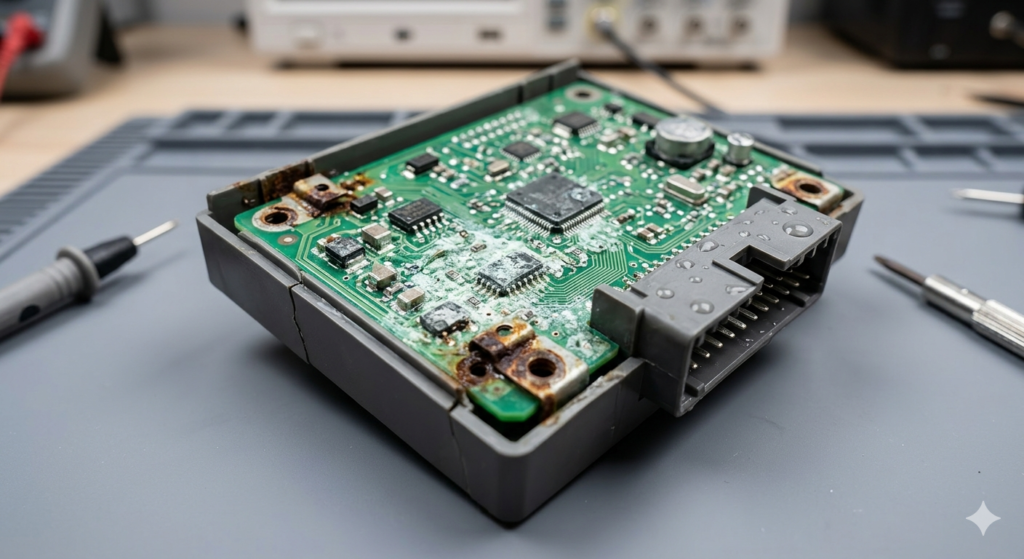
Because the BCM is often located in the footwell, behind the glovebox, or near the bulkhead, it is the first victim when seals fail. Once moisture enters the unit, electrolysis begins. This eats away at the copper tracks on the circuit board, leading to:
-
Ghosting: Lights flickering when the car is locked.
-
The “No-Turn-Off” Bug: The engine stays running even after you pull the key.
-
Total Communication Failure: Your OBDII scanner can’t even “see” the module.
The Top 3 “Leak Hotspots” by Model
If you drive one of these common UK vehicles, you are at high risk for water-related BCM failure:
| Vehicle | Common Leak Source | Resulting BCM Issue |
| Vauxhall Corsa (D & E) | Leaking brake master cylinder seal. | Corrosion on the BCM pins (No indicators). |
| Ford Transit Custom | Water running down the A-pillar wiring loom. | Intermittent starting and “Hill Start Unavailable.” |
| Land Rover Discovery | Blocked sunroof drains or windscreen seals. | Total interior electronics blackout. |
Step-by-Step: How to Check for Damage
Before you buy a new battery or alternator, perform these three checks:
-
The Carpet Test: Press your hand firmly into the carpet directly underneath your glovebox or dashboard. If it feels even slightly damp, you have a leak.
-
The Visual Inspection: If you can access your BCM, look for white, chalky residue (corrosion) or green “fuzz” around the multi-plug connectors.
-
The Smell Test: A musty, “old basement” smell in the cabin is a 90% guarantee that moisture is trapped near your electrical components.
“I’ve Found Water Damage… Now What?”
Stop! Do not simply buy a second-hand BCM from a scrap yard. Modern BCMs are “vin-locked” to the vehicle. If you plug in a used unit, the car won’t start, and you might even corrupt your dashboard data.
The Fix:
-
Step 1: Fix the Leak First. There is no point repairing the BCM if it’s going to get rained on again next week. Clear your scuttle drains and check your door seals.
-
Step 2: Professional Restoration. Send your water-damaged unit to us. We don’t just “clean” it; we rebuild the damaged circuit paths and replace corroded micro-processors.
-
Step 3: Plug-and-Play. Because we use your original data, you won’t need to pay a mobile locksmith or a dealer to re-program your keys.
Save Your BCM Before It’s Too Late
A small leak today is a dead car tomorrow. If you suspect water ingress has reached your module, acting fast can save you hundreds in replacement costs.
Expert Tip: If you see green corrosion on your BCM pins, do not try to scrape it off with a screwdriver. You risk shorting the internal capacitors and making the unit unrepairable.
Need a specialist opinion?